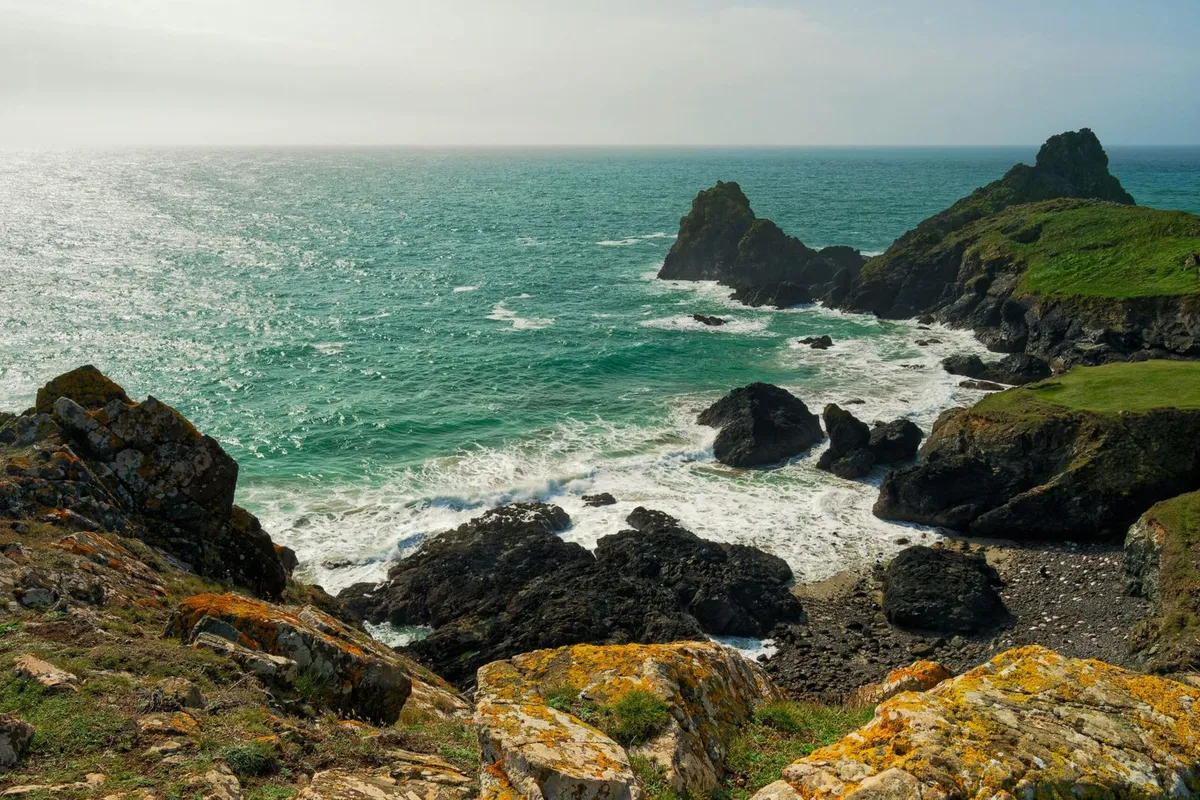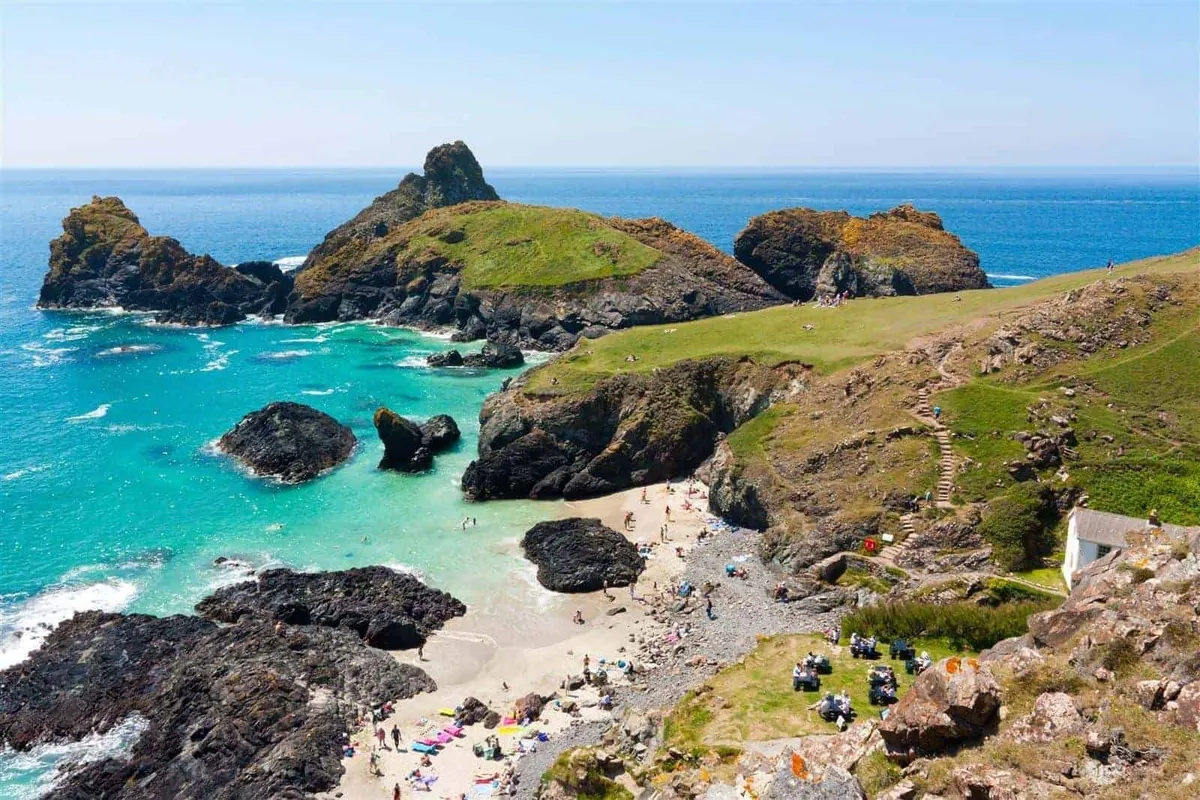
Cornwall sits at the far southwestern tip of England - roughly 270 miles from London and 200 miles from Birmingham. That remoteness is part of the appeal, but it does mean the journey requires a bit of planning. The good news is that you have five distinct ways to get here: car, train, plane, coach, and ferry. Each has its own trade-offs between cost, speed, and comfort.
This guide covers every option, with practical details on routes, journey times, and what to expect when you arrive.
Driving to Cornwall
The car remains the most popular way to reach Cornwall. It gives you total flexibility once you arrive - and you will want that flexibility, since many of the best beaches, coves, and villages sit along narrow lanes with no bus service.
The main routes
There are two primary driving routes from London:
M4 to M5 to A30 - Take the M4 west from London, join the M5 south at Bristol, then exit at Exeter (junction 31) onto the A30. This route is about 270 miles to Truro and takes roughly 5 hours in clear traffic.
M3 to A303 to A30 - Head southwest on the M3, join the A303 past Salisbury, and continue onto the A30 after Exeter. This route is a similar distance but can be slower due to single-carriageway sections on the A303 near Stonehenge, where queues build on summer weekends.
From other cities, the journey is shorter. Birmingham to Cornwall takes about 4.5 hours via the M5, and Bristol to the Cornwall border is around 2.5 to 3 hours.
The A30/A38 split
At Exeter, you have a choice. The A30 heads straight through the middle of Cornwall via Bodmin and is the faster route to the north coast, Newquay, Padstow, and west Cornwall. The A38 swings south through Plymouth and crosses the Tamar Bridge into southeast Cornwall - better for Looe, Polperro, and the Fowey area. Pick the one that matches your destination.
Summer traffic advice
Cornwall’s roads get seriously busy between mid-July and the end of August. The worst days are Fridays and Saturdays, when thousands of holidaymakers arrive and depart on changeover days.
Some practical tips:
- Travel early. Leave before 7am or after 7pm to avoid the worst congestion around Bristol and on the A30.
- Avoid the M4/M5 junction at Bristol on Saturday mornings. Traffic from London, the Midlands, and Wales all converges here. Delays of 60 to 90 minutes are common in peak summer.
- The A303 at Stonehenge is a well-known bottleneck. If you are stuck, divert via the A360 through Shrewton and Chitterne to rejoin the A303 further west.
- Cornwall Services at Victoria near Bodmin is the only full motorway-style service station on the A30 in Cornwall. Fill up before you pass it if heading further west.
Parking
Cornwall’s car parks are mostly pay-and-display. Expect to pay between 3 and 8 pounds per day. National Trust members park free at NT car parks including Kynance Cove, Bedruthan Steps, and Godrevy. Download the RingGo and JustPark apps before you arrive - many car parks are now cashless.
By train
Train travel to Cornwall is comfortable, scenic, and avoids the stress of motorway driving. The journey along the south Devon coast - with the railway running right along the sea wall at Dawlish - is one of the finest stretches of railway in Britain.
London to Cornwall
Great Western Railway (GWR) operates direct trains from London Paddington to Penzance, with stops at Plymouth, Bodmin Parkway, Par, Truro, St Erth, and Penzance. The fastest services take about 5 hours, with an average journey time closer to 5 hours 30 minutes. Around 18 trains run daily on this route.
Advance single tickets from London start at roughly 50 pounds in Standard Class if booked early. Anytime singles cost significantly more - around 150 pounds. Book as early as possible: GWR releases tickets up to 12 weeks ahead, and the cheapest fares sell out fast.
The Night Riviera sleeper
One of only two sleeper trains in Britain, the Night Riviera departs London Paddington at 23:45 and arrives in Penzance at around 07:45 the following morning. It runs six nights a week (not Saturdays). Boarding opens from around 22:30, so you can settle into your cabin before departure.
The train stops at Plymouth, Truro, St Erth, and Penzance. A seated ticket starts from about 25 pounds. A Standard Class sleeping berth - a twin-bed cabin for single or shared use - starts from around 84 pounds on top of the rail fare. Cabin passengers can use the First Class Lounge at Paddington before departure and the Sleeper Lounge at Penzance on arrival. Book via the GWR website; berths sell out weeks ahead in summer.
Branch lines
Cornwall has four branch lines that connect the main line to coastal towns:
- St Ives Bay Line (St Erth to St Ives) - 4 miles, 13 minutes, roughly every 30 minutes. One of the most scenic short railway journeys in England, running along the coast above Carbis Bay. A day return costs 4.20 pounds.
- Maritime Line (Truro to Falmouth) - Trains run about every 30 minutes, connecting the county city with the port town.
- Atlantic Coast Line (Par to Newquay) - A seasonal service linking the main line to the north coast. Fewer trains outside summer.
- Looe Valley Line (Liskeard to Looe) - Follows the river valley through woodland to the harbour. No Sunday service in winter.
Money-saving tips
- The Cornwall Ranger ticket costs 17 pounds for adults and gives a day of off-peak rail travel across Cornwall and to Plymouth.
- The Ride Cornwall ticket (21 pounds adult) adds local bus travel to the Ranger.
- A Devon & Cornwall Railcard costs 12 pounds per year and gives residents a third off most off-peak tickets for two people.
- A Two Together Railcard or 16-25 Railcard (30 pounds per year) saves a third on most fares nationally.
By air
Newquay Cornwall Airport
Newquay Cornwall Airport (NQY) is Cornwall’s only commercial airport, located about 5 miles from Newquay town centre. As of 2026, 8 airlines fly from Newquay to 13 destinations.
Key routes include:
- London Stansted - Ryanair (seasonal, March to October). Note: the London Gatwick PSO route ceases permanently on 31 May 2026 after Cornwall Council withdrew funding.
- Edinburgh - Ryanair (seasonal, June to September)
- Manchester and Glasgow - Loganair (seasonal)
- Dublin - Aer Lingus (year-round). Dublin offers US immigration pre-clearance, making onward flights to New York, Boston, and Chicago straightforward.
- European routes - Dusseldorf (Eurowings), Zurich (Edelweiss), Malaga and Faro (Ryanair, seasonal)
The airport is compact and easy to navigate. New C3 security scanners mean there are no liquid or laptop restrictions when departing. In 2025, it was ranked the UK’s friendliest airport.
Getting from the airport: Bus route 56 connects the airport to Newquay and Padstow. Taxis to Newquay town centre cost around 10 to 15 pounds. Car hire is available on site from major providers.
Exeter Airport as an alternative
If you cannot find a suitable flight to Newquay, Exeter Airport is about 75 miles from the Cornwall border. Airlines include Ryanair, Loganair, TUI, KLM (with Amsterdam hub connections), and Aer Lingus. From Exeter, you can hire a car or take a GWR train from Exeter St Davids - roughly 2 hours to Truro by rail.
By coach
Coach travel is the cheapest way to reach Cornwall, though journey times are long.
National Express
National Express runs daily services from London Victoria Coach Station to multiple Cornwall destinations:
- London to Newquay - From about 7 hours 15 minutes. Fares start around 20 pounds if booked well ahead.
- London to Penzance - Around 8.5 to 9.5 hours. The route 504 stops at Bodmin, Truro, and other Cornish towns along the way.
- Up to 6 or 7 services per day on peak routes, fewer off-season.
All coaches have USB charging, free Wi-Fi, and a luggage allowance of two medium suitcases plus hand luggage. Book at nationalexpress.com - the earlier you book, the cheaper the fare.
Megabus and FlixBus
Megabus also serves Cornwall, with fares structured like budget airlines - book early for the lowest prices. Routes run via Exeter, Plymouth, and Bodmin to Newquay. Tickets go on sale about 6 to 7 weeks ahead.
FlixBus offers London to Penzance from around 17 pounds, with an average journey time of about 9 hours.
Is the coach worth it?
For solo travellers on a budget, yes. A return coach ticket booked in advance can cost under 40 pounds - a fraction of the train fare. The trade-off is time. Bring a book, a charger, and patience.
By ferry
Brittany Ferries: Roscoff to Plymouth
If you are travelling from France or continental Europe, Brittany Ferries operates a direct crossing from Roscoff in Brittany to Plymouth. From Plymouth, Cornwall is just across the Tamar Bridge - about 15 minutes by car to the county border, or roughly an hour to Truro.
- Crossing time: Daytime sailings take around 5.5 hours. Overnight crossings run 9 to 11 hours.
- Frequency: Up to 7 sailings per week in summer, reduced to 2 or 3 per week in winter.
- Cost: Foot passenger fares start from about 42 pounds one way. Car plus driver starts from around 155 pounds.
- Ships: The Pont-Aven (capacity 2,400 passengers) and the Armorique operate this route.
This is a practical option for visitors driving from France, Belgium, the Netherlands, or Spain. You avoid the Channel Tunnel and the long drive through England entirely.
Getting around Cornwall
Arriving is only half the challenge. Cornwall is a large county - about 80 miles from Bude in the north to Land’s End in the west - and the best sights are spread across both coasts.
With a car
A car gives you the most freedom. The A30 runs east-west through the centre, and the A39 (Atlantic Highway) follows the north coast. Beyond these main roads, expect narrow single-track lanes with passing places, blind bends, and tall hedgerows. Drive carefully, pull into passing places on your left, and fill up in larger towns - fuel stations are scarce on the Lizard and the Roseland.
Without a car
It is possible to holiday in Cornwall without a car, but it takes more planning. Here is what is available:
Trains - The main line and four branch lines cover Penzance, St Erth, St Ives, Truro, Falmouth, Par, Newquay, Bodmin Parkway, Liskeard, and Looe. If your accommodation is in one of these towns, trains work well.
Bus route 56 - Runs between Newquay and Padstow via Watergate Bay, Mawgan Porth, and Newquay Cornwall Airport. This replaced the old open-top Atlantic Coaster service (which was discontinued in 2025) with standard double-decker buses. Check the Transport for Cornwall website for current timetables.
Park and ride - Truro operates two park and ride sites at Langarth and Tregurra, with buses running every 10 to 15 minutes into the city centre. An adult day ticket costs 2.50 pounds. St Ives has the St Erth park and ride, where you leave your car and take the branch line train into town - 4.10 pounds for parking before 10am on weekdays, 2.90 pounds at other times, plus 4.20 pounds return for the train. In summer, this is far easier than trying to park in St Ives itself.
Local buses - Transport for Cornwall operates routes across the county, though services to rural areas can be infrequent. The Ride Cornwall day ticket (21 pounds) covers all local buses and trains within Cornwall.
Taxis and private transfers - Available in all main towns. Useful for reaching remote locations, but expensive for regular use. Airport transfers from Newquay Cornwall Airport to towns further afield typically start around 30 to 50 pounds.
The best approach for car-free visitors
Base yourself in a well-connected town - Truro, St Ives, Falmouth, or Penzance - and use the branch line trains and local buses for day trips. You will not reach every beach or village, but you will cover the main highlights without needing a car.
Planning your journey: a quick comparison
| Method | Journey time (from London) | Cost (one way, approx.) | Best for |
|---|---|---|---|
| Car | 5 hours | Fuel + parking | Families, flexibility |
| Train | 5-5.5 hours | From 50 pounds advance | Comfort, scenery |
| Night Riviera | 8 hours (overnight) | From 25 pounds seated | Maximising holiday time |
| Plane | 1 hour flight + transfers | From 30 pounds | Speed, if booked early |
| Coach | 7-9.5 hours | From 17 pounds | Budget travellers |
| Ferry (Roscoff) | 5.5 hours crossing | From 42 pounds foot | European visitors |
Whatever way you travel, Cornwall is worth the journey. Once you arrive, start planning your places to stay and make the most of your time on this remarkable stretch of coastline.