Kynance Cove
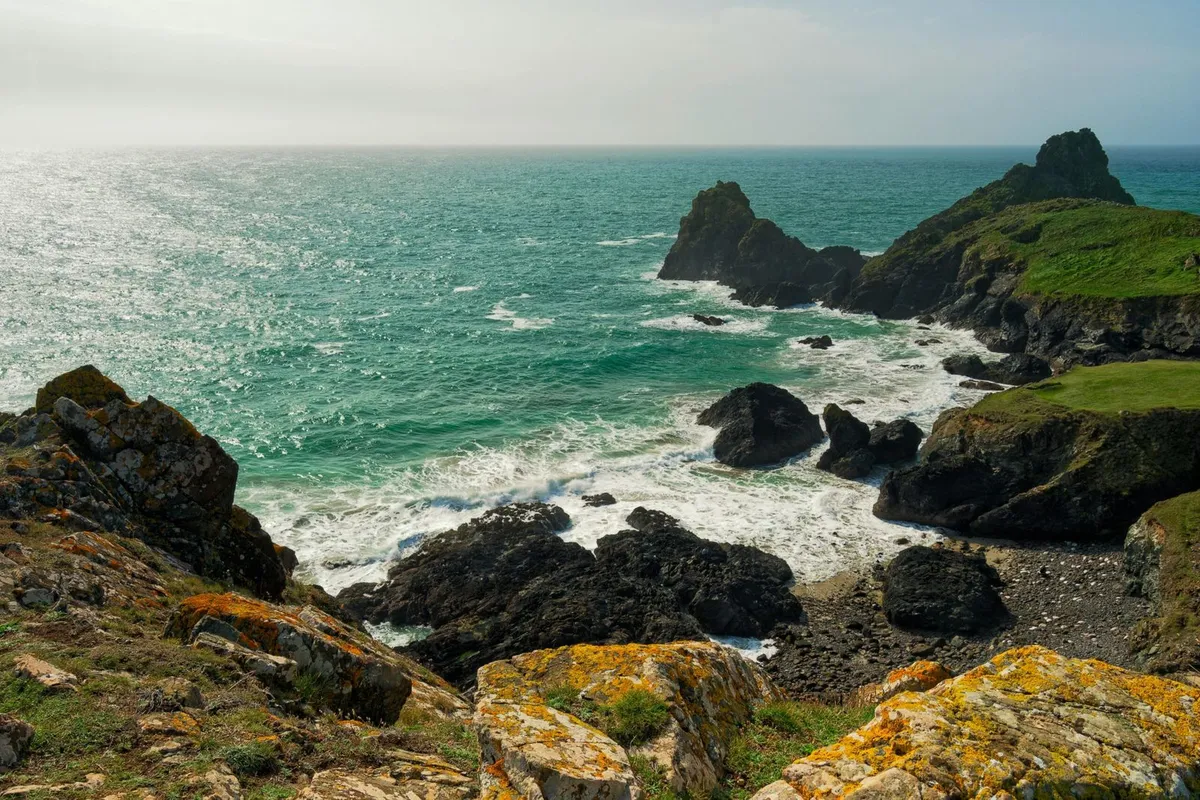
Turquoise water and serpentine rock formations at the tip of the Lizard, one of the most photographed spots in Cornwall.
At a Glance
Beach Type
sandy
Dogs
Seasonal restrictions
Lifeguard
Yes (seasonal)
Parking
Available
Access
Difficult (cliff path)
Swimming
Generally safe
Facilities
Activities
Stay near Kynance Cove
Closest cottage just 2km away
Kynance Cove sits near the tip of the Lizard, one of Cornwall’s southernmost points, and is one of the most photographed beaches in the UK. The cove is formed by green and red serpentine rock - a rare geological formation found in only a handful of places worldwide - topped with cliffs covered in vibrant grasses and wildflowers. At low tide the beach opens to reveal a wide sandy stretch with sea caves, arched rock formations, and isolated stacks like the Bellows and the Bishop.
Geology
Serpentine is a rock formed deep in the oceanic crust around 390 million years ago, then uplifted to the surface during continental collision. The Lizard is one of only three places in the UK where it appears at the surface. Its swirling greens, reds, purples and blacks come from the minerals olivine and pyroxene, altered by seawater into the serpentine group. The rock is soft enough to carve - local shops in Lizard village still turn ornaments and jewellery on lathes.
The stacks and arches visible at low tide - Asparagus Island, the Bellows, the Steeple, and the Bishop - were once connected to the mainland. Erosion along weaker fault lines cut them off. The Bellows is named for the sound air makes when forced through a blowhole at the base on the right swell.
Swimming and snorkelling
The clear turquoise water that makes Kynance famous in photographs is genuine - the sandy seabed and sheltered orientation produce some of the clearest swimming water in Cornwall. The best swimming is in the main cove at mid to low tide, when a sandy pool forms between the rocks. Snorkelling around Asparagus Island and the stacks yields anemones, blennies, small wrasse, and occasionally dogfish in the deeper water.
RNLI lifeguards patrol during summer, typically late May to late September. Swim between the red and yellow flags. The cove floods quickly on a rising tide - the main beach can disappear within two hours of high water, and people do get cut off against the cliffs every year. Check the tide times before you commit to the beach.
Water sports
Kayakers and paddleboarders launch from the main beach and paddle around the stacks into neighbouring Pentreath Beach, which is only reachable at low tide or from the water. Sea caves under the cliffs to the north are navigable on calm days. On bigger swells the cove holds a short right-hand reef break, but it is rarely worth the effort given better options nearby. Coasteering companies based in Helston and Mullion occasionally include Kynance on their routes.
Getting there
Kynance Cove is 11 miles south of Helston and 7 miles south-west of the Lizard village. The only vehicle access is the single-track road from Lizard village to the National Trust car park on the cliffs above the cove. The road is narrow with passing places; in peak summer it can queue back a mile or more.
From the car park, a steep tarmac path drops around 60 metres to the beach in a quarter-mile walk. The gradient is significant but the path is well-surfaced - accessible with care for moderately mobile visitors, though mobility scooters are difficult. An alternative clifftop walk from the car park follows the South West Coast Path 2km south-east to Lizard Point, with views down onto the cove from above.
Parking, facilities and admission
The National Trust car park is the only realistic option. Charges start at £2 for one hour, rising to £8 for the day at peak times. National Trust members park free. Spaces fill by 10am in July and August; arrive before 9am or after 4pm for the best chance. Overflow parking opens in the busiest weeks but still fills.
Kynance Cove Cafe, halfway down the cliff path, serves hot food, cakes, cream teas and drinks year-round (weather permitting - the cafe closes for genuine storms). The cafe has a terrace with views over the cove. Toilets are available at both the car park (seasonal) and next to the cafe on the beach (year-round).
When to visit
Low tide is essential - at high tide only a narrow strip of sand remains, and the stacks lose their drama when you cannot walk out to them. Check tide times on magicseaweed.com or the BBC tides page before travel; aim for arrival 2-3 hours before low tide.
May and June deliver the best combination of long daylight, moderate crowds, and wildflowers on the cliffs - spring squill, thrift, kidney vetch, and sea campion. September brings warmer sea temperatures and fewer visitors. July and August are dramatically busier; school holidays typically mean car park queues and a packed main beach. Winter visits are rewarding for storm-watchers - the cafe shortens its hours but Asparagus Island in a big swell is extraordinary to watch from the clifftop.
Nearby
The Lizard itself (around 15 minutes’ drive) has two more famous beaches - Housel Bay and Polpeor Cove - plus the Lizard Lighthouse and Most Southerly Point. Polurrian Cove and Poldhu Cove on the west side of the peninsula face the Atlantic and hold surf when Kynance is flat. Mullion Cove, 4 miles north, is the biggest harbour village on the Lizard with a good pub, the Old Inn.
Dog access
Kynance Cove has seasonal dog restrictions - dogs are banned between Easter and 1 October during the day (10am to 6pm). Outside these hours and dates, dogs are welcome. Water is available from the cafe; rinse facilities in the car park are limited, so bring a tub for salty paws.
Make a day of it
Things to do near Kynance Cove


Good to know
Frequently asked questions
- Can I take my dog to Kynance Cove?
- Dogs are welcome at Kynance Cove outside the summer restriction period. Most Cornwall beaches with seasonal rules ban dogs between Easter and September, typically 10am to 6pm. Check local signage for exact dates.
- Is Kynance Cove lifeguarded?
- Yes, Kynance Cove is patrolled by RNLI lifeguards during the summer season, typically from mid-May to late September. Always swim between the red and yellow flags.
- Is there parking at Kynance Cove?
- The National Trust car park sits on the cliffs above the cove. Members park free; non-members pay from £2 for one hour. Spaces fill fast in summer, so arrive early.
- Is Kynance Cove good for swimming?
- The clear turquoise water makes Kynance Cove one of Cornwall's best swimming spots. Snorkelling is also popular thanks to the rock pools and marine life around the serpentine formations. RNLI lifeguards patrol during summer.
- What facilities are at Kynance Cove?
- Kynance Cove has a year-round cafe serving hot food, cakes and drinks, plus toilets at both the car park and on the beach. The car park toilets are seasonal; the beach toilets are open all year.
- Where is Kynance Cove?
- Kynance Cove is on the south coast of Cornwall, near the tip of the Lizard. The National Trust car park is the closest access point.
- How do I get to Kynance Cove?
- Set your sat nav for Helston and follow local signs from there. There is a car park at the beach. Cornwall beach car parks fill early in peak season, so aim to arrive before mid-morning in summer.
- Where can I stay near Kynance Cove?
- There are several holiday properties near Kynance Cove, with the closest just 2km away. Prices start from £609 per week.