Cornwall’s mild, wet climate and the warming influence of the Gulf Stream create growing conditions that most of Britain can only envy. Subtropical plants thrive in frost-free coastal valleys. Camellias and magnolias flower weeks earlier here than anywhere else on the mainland. The result is a concentration of world-class gardens packed into a county roughly 80 miles long - over 20 are open to the public, and around a dozen deserve a full afternoon.
Here are 11 of the best, from restored Victorian estates to contemporary sculpture trails.
The Lost Gardens of Heligan
Near Mevagissey | Open daily | 200 acres
Heligan is the garden that put Cornish horticulture back on the map. Abandoned after the estate’s gardeners left for the First World War, the grounds lay buried under decades of undergrowth until Tim Smit and John Willis began clearing brambles in 1990. What they uncovered - Victorian glasshouses, a pineapple pit, melon houses, walled productive gardens - has since been painstakingly restored.
The 200-acre site splits into distinct zones. The Productive Gardens grow heritage fruit and vegetable varieties using traditional methods. The Pleasure Grounds hold an Italian garden, crystal grotto, and ornamental borders. The Jungle, a steep subtropical valley, is thick with tree ferns, bamboo, and banana plants thriving in the sheltered microclimate. Look out for the Mud Maid and Giant’s Head - living sculptures that shift with the seasons.
Allow a full half-day. The coastal footpath to Mevagissey starts from the estate, so you can combine a garden visit with a harbour lunch. Dogs are welcome on leads. Open daily from 10am; last admission is 3.30pm on most days and earlier on the shorter winter days, so check the opening times calendar. Check heligan.com for current ticket prices.
Best season: Year-round, but the Jungle is at its most dramatic in summer. Spring brings bluebells and the productive gardens into full swing.
Eden Project
Near St Austell | Open daily | Two biomes + outdoor gardens
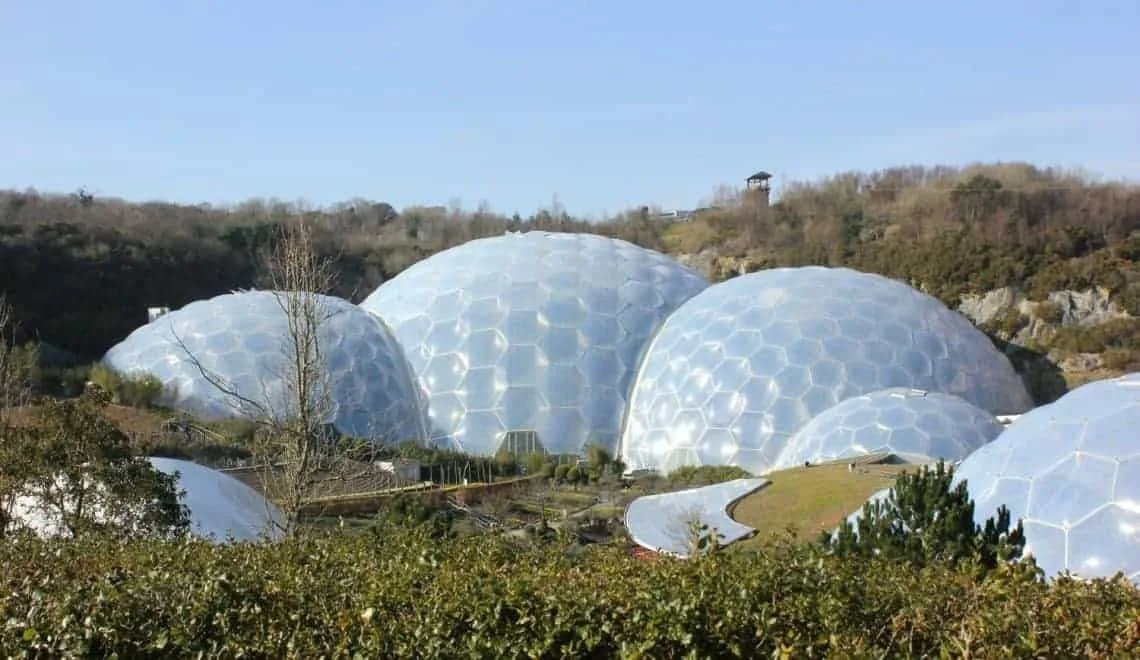
The Eden Project needs little introduction. Two massive biomes - the Rainforest Biome at 50 metres tall and the smaller Mediterranean Biome - sit in a former china clay pit and house plants from across the world’s climate zones. The outdoor gardens deserve more time than most visitors give them, with 30 acres of wildflower meadows and crop displays that change seasonally.
Eden works well as a rainy day activity since the biomes keep you under cover for hours. Every ticket functions as an annual pass, so a return visit within 12 months is free. Under 5s go free. Book online in advance, as walk-up tickets cost more.
Best season: Any time. The Rainforest Biome is impressive year-round. The outdoor gardens peak from June to September.
Trebah Garden
Near Falmouth | Open daily | 26 acres
Trebah is a ravine garden that drops sharply from the house down to a private beach on the Helford River. The scale is theatrical - mature tree ferns, giant gunnera, and towering rhododendrons line the steep paths as you descend through 26 acres to the water. The canopy of exotic trees overhead gives the whole place a subtropical weight that feels more Madeira than Cornwall.
The garden has a direct connection to D-Day: troops from the American 29th Infantry Division departed from Trebah’s beach for Omaha Beach in June 1944. A memorial marks the spot. Trebah Kitchen serves decent food, and the gift shop and plant centre are free to enter without a garden ticket. Dogs are welcome on leads.
Best season: March to June for rhododendrons and azaleas. The hydrangea valley peaks in late summer. Last admission 3.30pm.
Trelissick Garden
National Trust | Near Truro | Open daily | 30+ acres | NT members free
Trelissick sits on a peninsula above the Fal estuary, and the views alone justify the entrance fee. The formal garden covers over 30 acres with tender and exotic plants that benefit from the sheltered, south-facing position. The wider estate adds 300 acres of woodland walks, parkland, and waterside paths along the Fal.
The approach to planting is more refined than Trebah’s wild drama - expect well-maintained borders, a fig garden, and a large hydrangea collection. The King Harry Ferry runs nearby, making Trelissick a useful stop on a circular drive around the Roseland. The second-hand bookshop in the barn is reliably good. Parking is free for NT members.
Best season: Late spring for the formal borders. Autumn colour is strong here thanks to the mature deciduous trees across the estate.
Glendurgan Garden
National Trust | Near Falmouth | Check days before you go | NT members free
Glendurgan occupies a valley running down to the tiny hamlet of Durgan on the Helford River. Three valleys of planting converge at the bottom, creating a sheltered microclimate where tulip trees, camellias, and magnolias grow to impressive size. The cherry laurel maze, planted in 1833, remains the garden’s centrepiece - getting lost in it is a genuine possibility.
This is one of the better gardens for families. The maze keeps children occupied, the beach at Durgan is swimmable in summer, and the scale is manageable without exhausting smaller legs. Glendurgan pairs naturally with neighbouring Trebah (less than a mile along the coast path) for a full day of gardens. Check the National Trust page for current opening days.
Best season: Late April and May for the magnolias and bluebells. The maze is at its thickest in midsummer.
Caerhays Castle Gardens
Near St Austell | Seasonal opening: spring only
Caerhays is a specialist’s garden, and the specialism is magnolias. The estate holds one of the finest collections in the world, the National Collection of magnolias, along with significant camellia and rhododendron plantings. Many of the original specimens were grown from seed collected by plant hunters in China and the Himalayas during the early 20th century.
The garden opens only in spring, timed around the flowering season: it re-opens in February 2027, and the 2026 season ran from early March to mid-June. This narrow window means it never gets as crowded as Heligan or Eden. The John Nash-designed castle is open for guided tours daily while the gardens are open, and there is a tea room on site. Check caerhays.co.uk for current dates and prices.
Best season: March and April for magnolias. Early camellias begin in February; late rhododendrons carry through to June.
Tremenheere Sculpture Gardens
Near Penzance | Open most of the year
Tremenheere is the most contemporary garden on this list. Set in a sheltered valley near Gulval, it combines exotic planting with permanent installations by artists including James Turrell, David Nash, and Tim Shaw. The Turrell “Skyspace” - a chamber with an open roof that frames the changing sky - is worth the visit on its own.
The planting leans subtropical, with tree ferns, palms, bamboo, and Mediterranean species thriving in the frost-free valley. But Tremenheere’s real distinction is how art and landscape interact. Each sculpture is sited to work with the terrain and the light, and the effect is more contemplative than a conventional garden visit. The on-site cafe is better than average. Check tremenheere.co.uk for current prices, as the ticket structure has changed recently. The gardens close from early November to mid-February.
Best season: Late spring and summer for the fullest planting. The art installations work in any weather.
Pencarrow House & Gardens
Near Bodmin | Open March-October
Pencarrow is a Georgian house surrounded by 50 acres of formal and woodland gardens, still owned by the Molesworth-St Aubyn family. The mile-long carriage drive up to the house is lined with specimen conifers and rhododendrons planted in the 1840s - impressive in its own right.
The formal gardens include an Italian garden, a rock garden, and an ice house. Children tend to gravitate toward the peacocks that roam the grounds freely. House tours run every 45 minutes from 11.15am, with the last tour at 3pm. The gardens, house, cafe and shop reopen in late March (22 March in 2027) and the house is closed on Saturdays. Everything closes at the end of October.
Best season: April and May for rhododendrons along the main drive. The Italian garden is at its best in high summer.
Lanhydrock
National Trust | Near Bodmin | Open daily | NT members free
Lanhydrock is best known for its grand Victorian house, but the gardens hold their own. The formal parterre above the gatehouse lodge is planted with seasonal bedding, and the higher garden shelters over 200 magnolia trees alongside camellias and rhododendrons beneath a mature tree canopy. The 900-acre estate beyond the formal gardens includes riverside walks along the Fowey valley and a network of mountain bike trails.
Entry covers both house and gardens, so it is among the dearer days out on the list. The estate parkland and woodland trails are free to access without a ticket. The house itself is a remarkably intact Victorian time capsule, right down to the kitchens and servants’ quarters. Worth the money if you have half a day. Parking is free for NT members.
Best season: Spring for magnolias and bluebells in the woodland. The parterre is replanted for summer and autumn displays.
Pine Lodge Gardens (Pinetum Gardens)
Near St Austell | Check opening times before you go
Pine Lodge - now trading as Pinetum Gardens - is a 30-acre botanical collection holding over 6,000 labelled plant species. That makes it one of the most diverse private plant collections in the West Country. The gardens include a Japanese garden, a lake, an arboretum, and herbaceous borders that provide colour from spring through autumn.
It rarely feels crowded. The labelling is excellent - genuinely useful if you want to identify plants for your own garden. Opening hours vary by season, so check the garden’s website first.
Best season: May and June for the herbaceous borders. The arboretum has good autumn colour.
Bonython Estate Gardens
The Lizard | Seasonal, weekdays - check before you go
Bonython sits on the Lizard, Cornwall’s most southerly point, and the mild maritime climate allows tender plants to survive outdoors year-round. The 20-acre garden includes herbaceous borders, a walled garden, ornamental lakes, and a woodland valley planted with tree ferns and palms. The South African planting in the walled garden is distinctive - you won’t see anything like it at the other gardens on this list.
This is a proper family-run estate garden. No cafe chain, no gift shop empire. You turn up, pay at the gate (card and contactless accepted), pick up a map, and explore at your own pace. The relaxed atmosphere and lack of crowds make it a good antidote to the bigger-name gardens. Opening is limited to certain weekdays in the season, so confirm dates before you drive out.
Best season: June and July for the herbaceous borders. The South African planting peaks in late summer.
Planning your garden visits
A few practical notes for getting the most out of Cornwall’s gardens:
- Look at the Great Gardens of Cornwall group if you plan several visits. Heligan, Eden, Trebah, Caerhays, Tremenheere and Bonython are all members; check the group’s website for any joint offers.
- National Trust membership pays for itself quickly in Cornwall. Trelissick, Glendurgan, and Lanhydrock are all included, and there are several more NT properties beyond gardens.
- Spring is peak season, but every garden on this list has something worth seeing in summer and autumn too. Winter visitors should focus on Heligan, Trebah, and Eden, which remain open and interesting year-round.
- Allow more time than you think. Two to three hours is typical for a medium-sized garden. Heligan and Lanhydrock can absorb a full day.
- Check opening days carefully. Caerhays is seasonal (spring only). Glendurgan has limited opening days. Bonython is weekdays only. Pencarrow’s house closes Saturdays. A wasted drive to a locked gate is nobody’s idea of a good afternoon.