Fowey is a south Cornwall harbour town built on a steep hillside above the River Fowey estuary. Unlike the surf-focused resorts on the north coast, Fowey faces east into a deep, sheltered river mouth. The harbour is still a working port - china clay ships pass through regularly - and the town’s narrow streets climb up from the waterfront in a tangle of slate-roofed houses, galleries, and restaurants.
Fowey is compact. You can walk from one end of town to the other in 10 minutes, though the hills will slow you down. What it lacks in size it makes up for in character. Daphne du Maurier lived here, Arthur Quiller-Couch wrote here, and the town’s literary festival has run since 1997. Add a 4-mile circular walk, a free English Heritage castle, an annual regatta, and some of the best waterside dining in Cornwall, and you have a town worth more than a day trip.
Fowey Harbour and River
The River Fowey is tidal, deep, and remarkably beautiful. The estuary runs south from Lostwithiel, widening as it passes through wooded valleys before opening into the harbour at Fowey and Polruan on the opposite bank.
Walking along the town quay gives you the best sense of the harbour’s activity. Sailing boats, fishing vessels, and the occasional china clay ship share the water. The Bodinnick car ferry crosses every few minutes, and the Polruan passenger ferry runs between the two shores throughout the day.
The river itself is excellent for kayaking and paddleboarding. The sheltered estuary means flat water most of the time, and you can paddle upstream into Pont Pill - a quiet, wooded creek that feels a long way from civilisation. Several operators in Fowey hire out kayaks and SUPs, and guided trips are available for those who want someone else to navigate.
Daphne du Maurier
Fowey’s literary identity is inseparable from Daphne du Maurier. The du Maurier family first came to Cornwall on holiday, and in 1926 they bought Ferryside - a house on the waterfront at Bodinnick, directly across the river from Fowey. It was here, looking out over the estuary, that du Maurier wrote her first novel, The Loving Spirit, published in 1931.
She went on to write Rebecca, Jamaica Inn, Frenchman’s Creek, and My Cousin Rachel, all drawing on the Cornish landscape. Menabilly, a large house hidden in woodland near Fowey, became Manderley in Rebecca - the most famous fictional house in English literature. Du Maurier lived at Menabilly for over 25 years before moving to nearby Kilmarth, which inspired The House on the Strand.
The Daphne du Maurier connection runs through the town. You can see Ferryside from the Fowey waterfront - it is a private house, but clearly visible from the Hall Walk and the Bodinnick ferry. A memorial to Arthur Quiller-Couch, who was du Maurier’s literary mentor and friend, stands on the Hall Walk at Penleath Point.
The du Maurier Fowey Literary Festival runs annually - in 2026, it took place from 1 to 9 May. The festival programme includes talks, walks, and events spread across venues in the town, and it draws authors and readers from across the country.
Hall Walk
The Hall Walk is one of the finest short walks in Cornwall. The circular route covers about 4 miles (6.5 km) and takes in both sides of the river, two ferry crossings, and a wooded creek.
The walk can start from Fowey, Bodinnick, or Polruan. Most people take the Bodinnick car ferry from Fowey and begin from the Bodinnick slipway. From there, a signed footpath climbs up through the hamlet and follows the ridge above the river. This section - the Hall Walk proper - dates to at least the 16th century, when it was an ornamental promenade created by the Mohun family of nearby Hall.
The views from the ridge are exceptional. You look straight down the estuary to the harbour mouth, with Fowey on one side and Polruan on the other. At Penleath Point, a granite monument commemorates Arthur Quiller-Couch. The path then turns inland to follow Pont Pill, a tidal creek bordered by ancient oak woodland. At the head of the creek, you cross a footbridge and climb to Polruan.
From Polruan, the passenger ferry takes you back to Fowey. The whole circuit takes about 2 to 2.5 hours at a reasonable pace, with some steep sections. Ferry fares are modest - the Bodinnick crossing costs around 2.50 pounds for foot passengers.
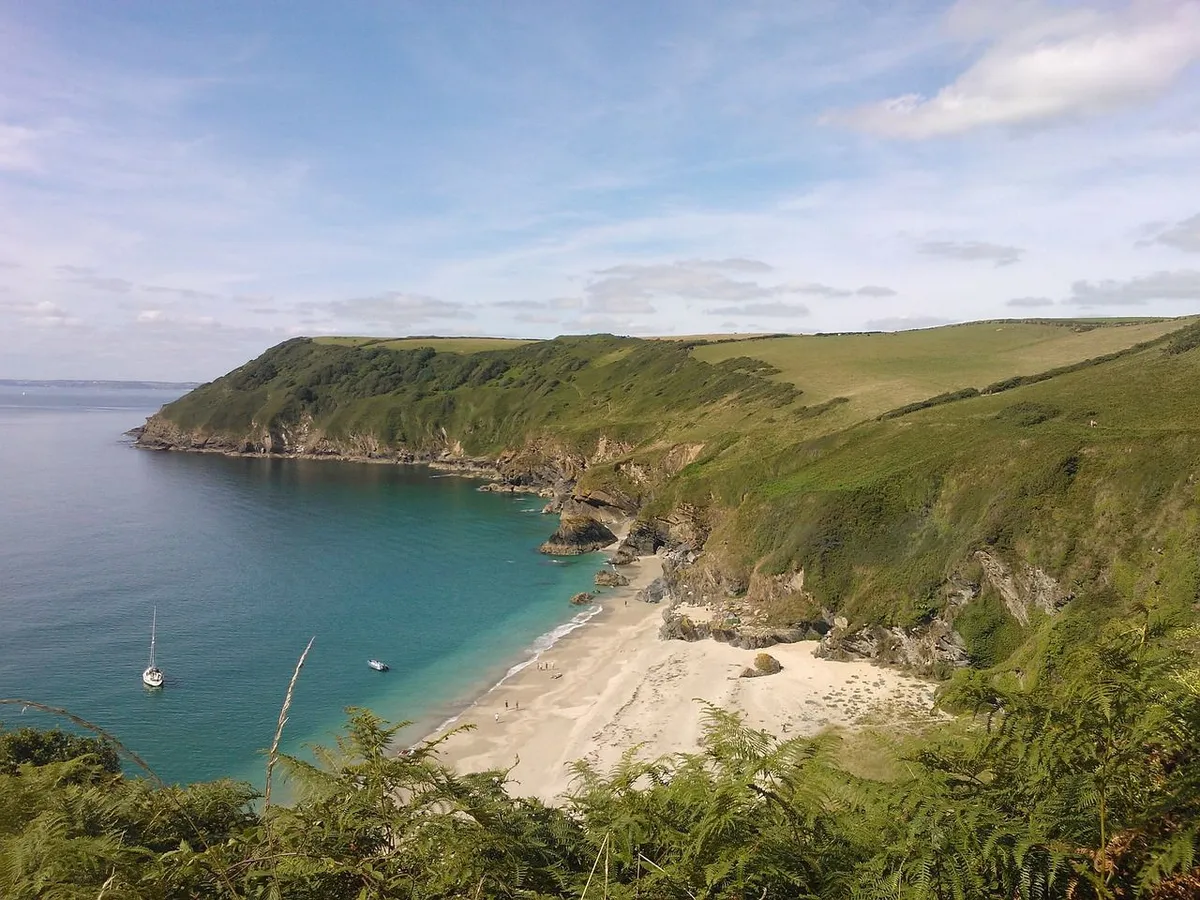
If you want to extend the walk, a path from the route leads down to Lantic Bay - a sandy beach backed by cliffs with no road access. Adding the Lantic Bay detour adds 2 to 3 miles to the total.
Readymoney Cove
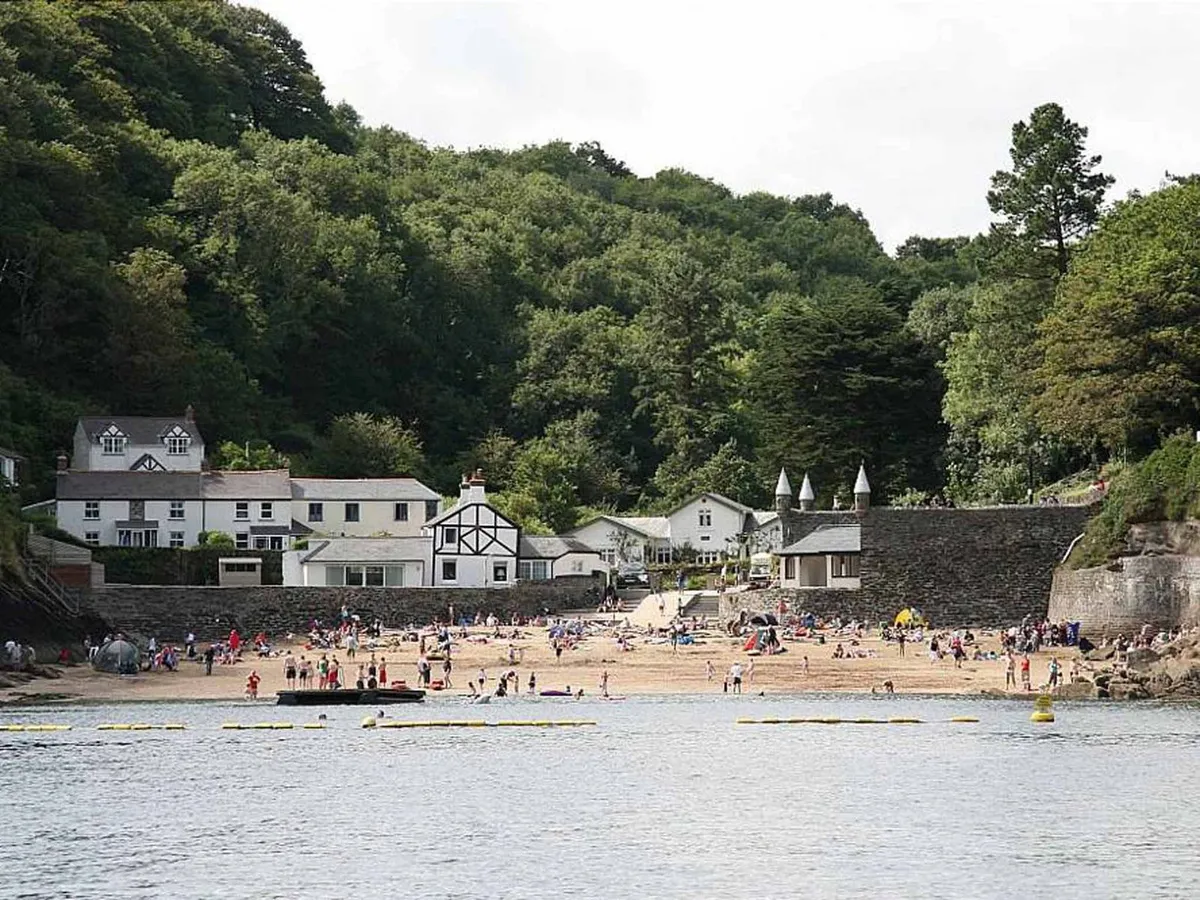
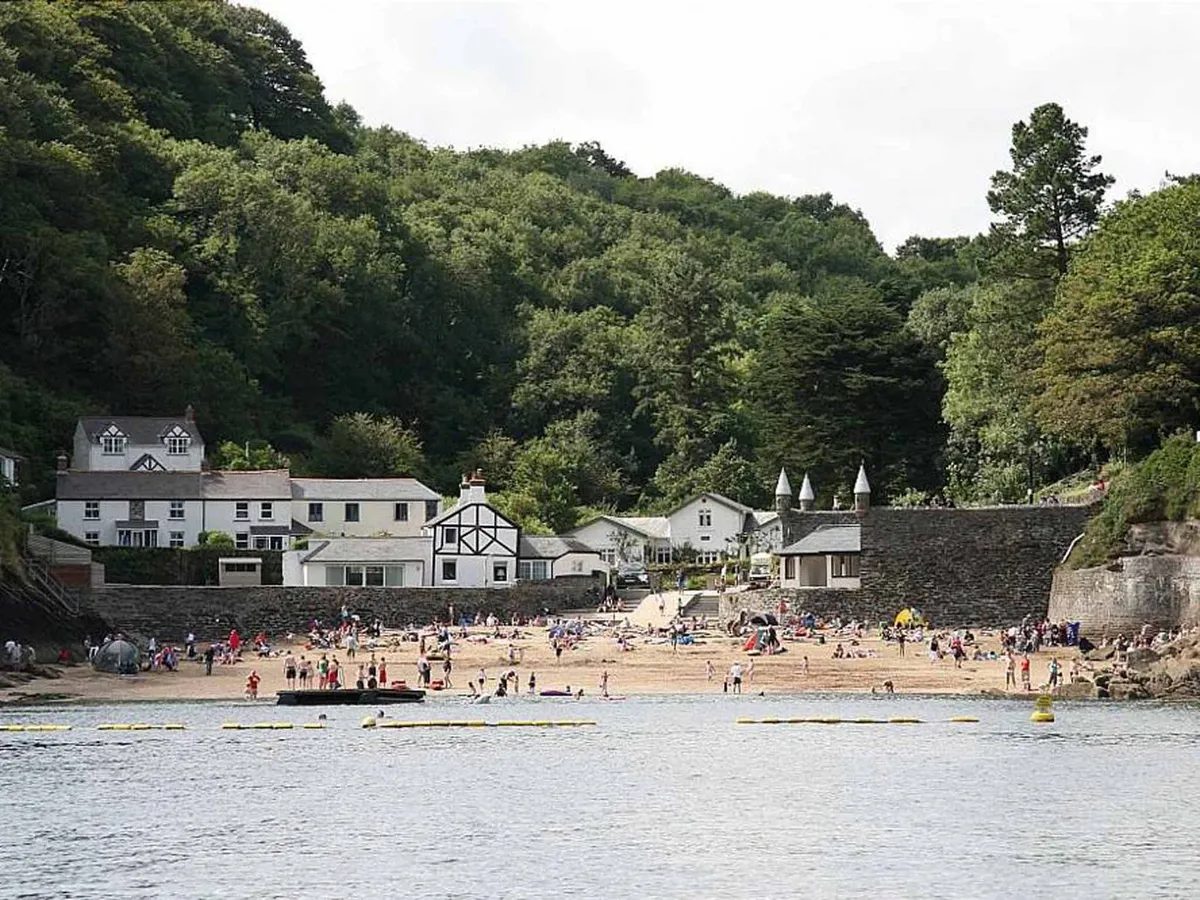
Readymoney Cove is Fowey’s beach - a small, sheltered cove about a 15-minute walk south of the town centre. The beach is sandy and backed by trees, with clear water that warms up reasonably well in summer. It is not large, but its sheltered position makes it a reliable swimming spot even when the north coast is being hammered by swell.
The name reportedly comes from the cove’s use as a landing point for smuggled goods - the phrase “ready money” referring to the cash that changed hands on the beach. Whether that is true or simply a good story, it suits the place.
Public toilets and a small car park are available near the beach. The car park is small and fills quickly in summer - walking from Fowey is the more reliable option.
St Catherine’s Castle
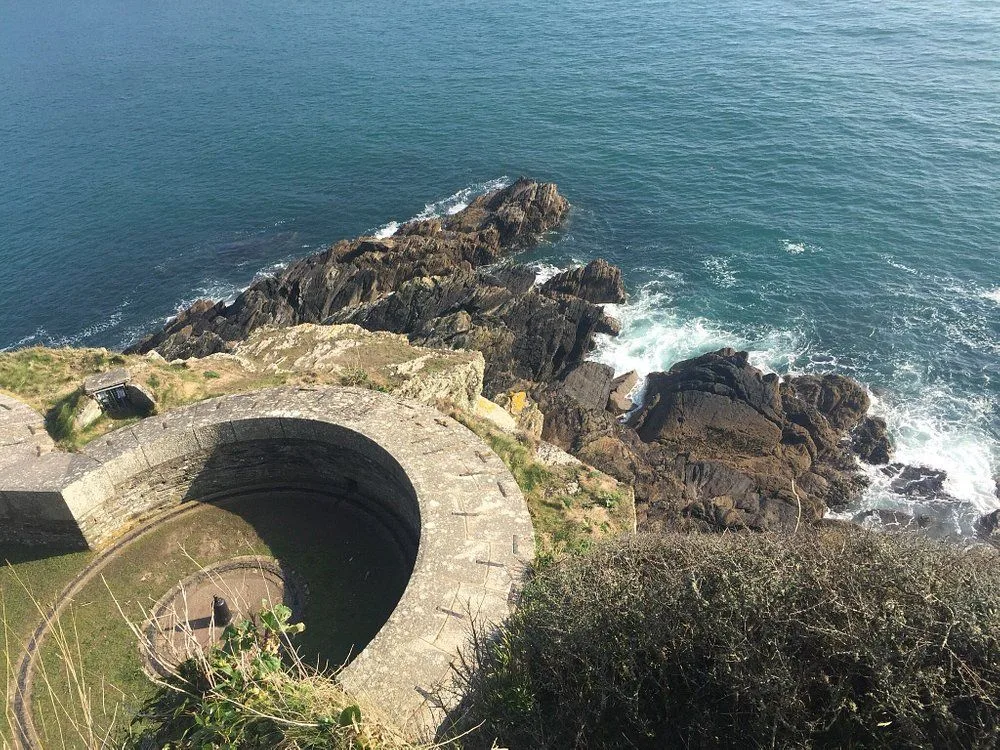
Above Readymoney Cove, a short but steep path climbs through woodland to St Catherine’s Castle. This small artillery fort was built by Henry VIII between 1538 and 1540 to defend Fowey Harbour, under the direction of local landowner Thomas Treffry.
The castle was later modified during the Crimean War in the 19th century and used again during the Second World War, when it housed an anti-aircraft gun and ammunition store. Today it is a ruin - but a well-preserved one with interpretable remains and commanding views across the harbour mouth.
Entry is free and the site is open during daylight hours. It is managed by English Heritage. The walk up from Readymoney Cove is steep and can be muddy after rain, but takes only about 10 minutes. There are unguarded drops within the ruins, so keep an eye on children. A free digital guide is available through the Bloomberg Connects app.
Fowey Regatta
Fowey Royal Regatta has been running since 1819, making it one of the oldest regattas in the country. It takes place in the third week of August each year - in 2026, dates are expected to be around 15 to 22 August, though it is worth confirming with the organisers closer to the time.
The week centres on sailing races in the harbour, including the Troy class - a type of boat built only in Fowey. But there is far more to it than racing. The regatta week includes a carnival procession through the town, live music on the Town Quay every evening, the traditional Giant Pasty ceremony, a classic car show, swimming races, and fireworks displays on at least two nights.
Most events are free to watch from the waterfront. If you are in Fowey during regatta week, book accommodation and restaurant tables well in advance - the town fills up completely. If you are not, the harbour is worth visiting at any time of year. The sailing activity runs from spring to autumn, and the town has a lively feel even outside peak season.
Polkerris Beach
Polkerris is a small, west-facing beach in a sheltered cove about 3 miles from Fowey by road. The beach is sandy and calm - the harbour wall protects it from most of the swell, making it one of the better swimming beaches on this stretch of coast. A beach cafe operates in season.
Polkerris is also a starting point for walks along the coast path toward Gribbin Head, where the red and white striped Gribbin Daymark tower stands as a navigation aid. The walk from Polkerris to the Daymark and back is about 3 miles and offers views along the coast in both directions.
It was near Polkerris that Daphne du Maurier saw a flock of seagulls diving around a man ploughing a field - an incident that inspired her short story The Birds, later adapted by Alfred Hitchcock.
Place House and St Fimbarrus Church
Place House is a fortified manor near the harbour that has been home to the Treffry family since the 13th century. The original structure includes a 15th-century tower that was famously defended against a French raid in 1457 by Elizabeth Treffry, who - according to local tradition - had molten lead poured over the attackers as they tried to break in. The house is private and not open to the public, but its castellated exterior is visible from the waterfront and the church next door.
St Fimbarrus Church, Fowey’s parish church, stands next to Place House. It is a Grade I listed building dating from the 14th century, though it was largely rebuilt after the French raid. The rebuilding was funded by Richard Beauchamp, Earl of Warwick, and his ragged staff symbol can be seen carved into the west tower, which was completed by 1471. The church marks the southern end of the Saints’ Way, an ancient route from Padstow to Fowey used by pilgrims travelling between Ireland and mainland Europe.
Inside, there is a 1601 pulpit, a Norman font, a 500-year-old wagon roof, and a clock mechanism installed in 1620. The church is free to enter and usually open during the day.
Kayaking and Paddleboarding
The River Fowey is one of the best places in Cornwall for flat-water paddling. The sheltered estuary means you can get on the water even when conditions on the open coast are rough. Several hire centres in Fowey offer kayaks and stand-up paddleboards by the hour, and guided tours run upstream into Pont Pill and the wooded creeks.
Pont Pill is the highlight. You paddle up a narrow, tidal creek under a canopy of oak trees, with barely another person in sight. At low tide the creek empties to mud, so timing matters - aim for mid to high tide.
For something more adventurous, you can kayak out of the harbour mouth and along the coast toward Lantic Bay or Polkerris, though this is only suitable for experienced paddlers in calm conditions.
Where to Eat
Sam’s
Sam’s has been running in a 13th-century building in the heart of Fowey since 1987. The restaurant serves locally landed fish from their own day boat, burgers, mussels, and scallops. The atmosphere is casual and lively, with colourful decor and a cocktail bar attached. It is popular - booking is recommended, especially in summer.
The Old Quay House - Samphire
The Old Quay House is a boutique hotel on the waterfront with a restaurant - Samphire - that looks out over the estuary. The menu focuses on seasonal Cornish ingredients, with seafood taking the lead. The dining terrace practically sits over the water. This is Fowey’s smartest dining option and a good choice for a special occasion.
The Dwelling House
The Dwelling House is a tea room and cafe that regularly appears in Fowey’s top restaurant rankings. It is small, charming, and serves excellent cakes and light meals. Afternoon tea here is worth building a day around.
Other Options
Fowey has a strong food scene relative to its size. Cafes and restaurants line the narrow streets between the church and the quay. Pasties, fish and chips, and ice cream are all easy to find on the waterfront. For an evening meal, booking anywhere in peak season is wise - the town’s restaurant capacity does not match its visitor numbers in July and August.
Getting to Fowey
Fowey has no railway station. The nearest is Par, about 3 miles away on the main London Paddington to Penzance line. A bus runs between Par station and Fowey. By car, the town is reached via the A3082 from the A390. Parking is limited - the main car park at Caffa Mill is pay and display and fills early in summer. The Park and Ride offers an alternative.
An option that avoids driving into town entirely is to park in Bodinnick and take the car ferry across. This also puts you at the start of the Hall Walk.
For places to stay near Fowey, the town and surrounding area have hotels, B&Bs, and holiday cottages. Polruan across the water offers a quieter alternative with regular ferry access to Fowey.
More to Do Nearby
Fowey sits on a stretch of coast with plenty to explore. Polperro and Looe are within easy reach to the east. Inland, Lostwithiel - the ancient capital of Cornwall - has antique shops and the impressive remains of Restormel Castle. Charlestown and its tall ships harbour is a short drive west.
For more ideas, see our guide to things to do in Cornwall and the Cornwall beaches guide.