Cornwall has one of the strongest regional food identities in England. Two products carry official geographical protection - the Cornish pasty (PGI since 2011) and Cornish clotted cream (PDO since 1998). The fishing fleet at Newlyn lands more fish by value than any other port in England. And the county’s restaurant scene ranges from harbourside fish and chip shops to Michelin-starred tasting menus.
This guide covers the full scope of eating and drinking in Cornwall, with links to our detailed guides on restaurants, pubs, cream teas, and more.
The seafood
Cornwall’s coastline runs for over 400 miles, and the fishing industry remains central to the county’s food culture. Newlyn, near Penzance, is the largest fishing port in England by value of catch. Padstow built its modern reputation on seafood, largely thanks to Rick Stein, who opened his first restaurant there in 1975. Ports like Looe, Mevagissey, and St Ives still land day-boat catches that go straight to local restaurants and fishmongers.
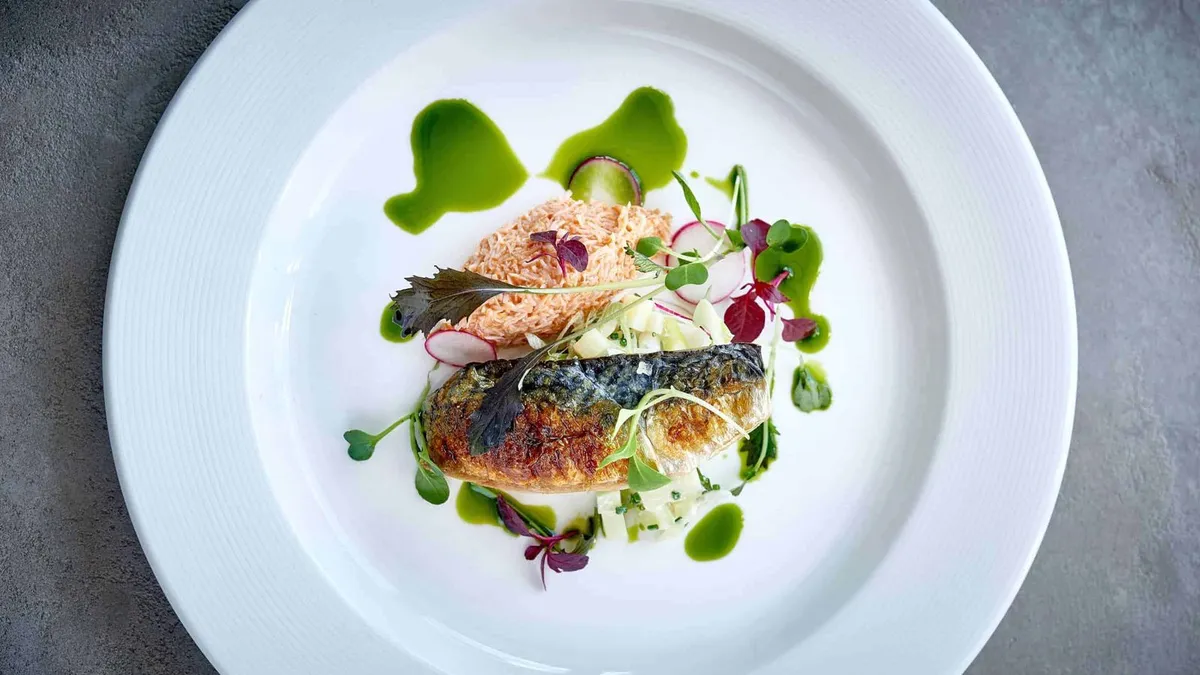
Crab and lobster dominate menus from spring through autumn. Mackerel is everywhere in summer - cheap, sustainable, and best eaten within hours of being caught. Oysters from the Fal Estuary are dredged under sail and oar between October and March, a method unchanged for centuries and required by local bye-law.
Fine dining
Cornwall punches above its weight for a rural county. Paul Ainsworth at No. 6 in Padstow holds a Michelin star. The county also has several Michelin Bib Gourmand entries, recognising quality cooking at reasonable prices. Nathan Outlaw, Rick Stein, and a new generation of chefs trained in Cornwall’s kitchens have built a dining scene that draws food-focused visitors year-round.
For our full rundown of the county’s top tables, read our guide to fine dining in Cornwall.
Best restaurants
Beyond the Michelin circuit, Cornwall has a deep bench of independent restaurants doing excellent food without the white-tablecloth formality. You will find everything from wood-fired pizza on the beach to tasting menus in converted barns. Many of the best places source ingredients within a few miles of the kitchen - fish from the morning’s catch, vegetables from farms inland, beef and lamb from Bodmin Moor.
We have picked 13 restaurants across the county that are worth booking ahead for. Read our guide to the best restaurants in Cornwall.
Best pubs
Cornish pubs range from 16th-century smugglers’ inns to modern gastropubs with harbour views. What most share is a relaxed atmosphere, real ale on tap, and a menu that leans on local produce. Several serve food that rivals the restaurants, but without the price tag or the need to book weeks ahead.
The county’s best pubs tend to cluster around harbour towns and coastal villages - places like Cadgwith, Port Isaac, and St Agnes. Inland, the moorland pubs around Bodmin Moor are worth seeking out for their character alone.
For our picks, see the best pubs in Cornwall.
Fish and chips
You cannot visit Cornwall without eating fish and chips at least once. The county has dozens of good chippers, and the standard is high - fresh fish, proper batter, and views that most seaside towns in England cannot match. The best ones use fish landed that morning at local ports, and several have queues out the door in summer for good reason.
Opinions vary on who does it best. We have made our case in the guide to the best fish and chips in Cornwall.
Cream teas
The cream tea is Cornwall’s most debated culinary tradition - not because anyone disagrees about the components (scone, clotted cream, jam, pot of tea), but because of the order. In Cornwall, jam goes on the scone first, then the cream on top. In Devon, they do it the other way round. This is a matter of genuine regional pride, and getting it wrong in a Cornish tea room will earn you a correction.
Cornish clotted cream holds Protected Designation of Origin (PDO) status, granted in 1998. It must be made from milk produced in Cornwall and have a minimum butterfat content of 55 per cent. The distinctive yellow colour comes from high carotene levels in the grass.
For the best places to sit down with a scone and a pot of tea, see our guide to cream teas in Cornwall.
Beach bars and sunset drinks
Newquay has Cornwall’s biggest concentration of beach bars, and summer evenings here have a relaxed, slightly chaotic energy. The Watering Hole at Perranporth is the only bar in the UK built directly on a beach. Watergate Bay has The Beach Hut, which runs from breakfast through to late drinks with the Atlantic as a backdrop.
For the full list of places to drink with sand between your toes, read our guide to beach bars and sunset spots in Newquay.
Family-friendly dining
Eating out with children in Cornwall is generally straightforward. The culture is relaxed, outdoor seating is common, and most pubs and cafes welcome families. That said, some places handle it better than others - proper children’s menus (not just chicken nuggets), high chairs that actually work, and enough space that you are not wedged against the next table.
We have rounded up the best options in our family-friendly dining guide.
Dog-friendly dining
Cornwall is one of the most dog-friendly counties in England, and that extends to its food scene. Many pubs and cafes welcome dogs as a matter of course, particularly those with outdoor seating or beer gardens. Some restaurants allow dogs in dedicated areas, and a few welcome them throughout.
For the full list of tested dog-friendly restaurants, pubs, and cafes, see our dog-friendly dining guide.
The Cornish pasty
The Cornish pasty received Protected Geographical Indication (PGI) status from the European Commission on 20 July 2011, after a nine-year campaign by the Cornish Pasty Association. Under UK law, the protection continued from 31 December 2020. To be sold as a “Cornish pasty,” the pasty must be prepared in Cornwall and follow a defined recipe: a D-shaped pastry crimped on one side, filled with beef (minimum 12.5%), swede, potato, and onion (minimum 25% vegetables combined), with the ingredients uncooked when assembled.
The pasty was originally a working lunch for tin miners - a complete meal in a sealed pastry case, with the thick crimp serving as a handle that could be discarded by hands stained with arsenic from the mines. Whether that origin story is entirely accurate is debated, but it makes a good tale.
Today, pasty bakeries are everywhere in Cornwall. Every town has at least one, and locals have strong opinions about which is best. The bigger names include Philps (based in Hayle, with branches across the county), Ann’s Pasties in the Lizard, and Malcolm Barnecutt in Bodmin. A traditional pasty costs roughly between 4 and 6 pounds depending on size and filling.
Local produce
Cornwall’s food identity goes well beyond restaurants. The county produces several distinctive products that are worth knowing about.
Cornish clotted cream
Cornish clotted cream has held PDO status since 1998 - one of the stricter EU food protections, meaning the milk must be sourced in Cornwall and the cream made entirely within the county. Rodda’s, based near Redruth since 1890, is the largest producer and the name you will see most often.
Cornish Yarg
Cornish Yarg is a semi-hard cheese wrapped in hand-picked nettle leaves, made by Lynher Dairies at Pengreep Farm near Truro. The name comes from Alan Gray (Yarg is Gray spelled backwards), who found a historical recipe in his attic. Around three tonnes of nettle leaves are picked each May and June by a team of roughly 50 hand-pickers. The cheese won Gold at the World Cheese Awards in 2019 and remains one of Cornwall’s most distinctive food products.
Beer and ale
Cornwall has a strong brewing tradition. Sharp’s Brewery in Rock produces Doom Bar, which became one of the UK’s best-selling cask ales after being acquired by Molson Coors in 2011. Skinner’s Brewery in Truro makes Betty Stogs, named after a character from Cornish folklore. St Austell Brewery, founded in 1851, is one of the oldest independent breweries in the country and brews Tribute, a pale ale widely available across the South West.
Smaller craft breweries have multiplied in recent years. Verdant Brewing Co in Penryn and Firebrand Brewing in Launceston are among the more notable names.
Wine
Camel Valley Vineyard, near Bodmin, has been producing wine since 1989. Their sparkling wines have won multiple Gold medals at the International Wine Challenge, and the vineyard holds Royal Warrants from both the King and the Queen. Tours and tastings run throughout the season, and the vineyard is a popular day out in its own right.
Knightor Winery near St Austell and Trevibban Mill near Padstow are also producing award-winning wines. Cornwall’s mild climate and long growing season suit grape varieties like Bacchus and Seyval Blanc.
Gin
Tarquin’s Cornish Gin is made at the Southwestern Distillery near Wadebridge, founded by Tarquin Leadbetter in 2012 - Cornwall’s first distillery in over a century. The gin is produced in hand-beaten copper pot stills and won “World’s Best Gin” at the 2017 San Francisco World Spirits Awards. Distillery tours run throughout the year and last around 90 minutes.
Food festivals
Cornwall hosts several food-focused festivals through the year. These are worth building a trip around if dates line up.
Porthleven Food Festival - A free three-day festival held in April in the harbour town of Porthleven, near Helston. First launched in 2009, it fills the harbour area with street food stalls, chef demonstrations, and live music. The 2026 festival runs 24 to 26 April.
Rock Oyster Festival - A weekend of food, music, and coastal entertainment at Dinham House Estate on the Camel Estuary, near Rock. Michelin-starred chefs run pop-up restaurants alongside live music acts. The 2026 festival runs 23 to 26 July. Tickets required.
Falmouth Oyster Festival - A free four-day festival in October marking the start of the native Fal oyster dredging season. Chef demonstrations, seafood stalls, and live music in Events Square. The 2026 dates are expected in October but not yet confirmed - check falmouthoysterfestival.co.uk for updates.
Padstow Christmas Fayre - A free four-day celebration of food, drink, and Christmas in early December. Chef demos from names like Rick Stein and Paul Ainsworth, alongside an artisan market. The 2025 fayre ran 4 to 7 December. The 2026 dates are not yet announced - check padstowchristmasfayre.co.uk for updates.
Where to start
If you are planning a trip around food, here is a quick summary of our detailed guides:
- Fine dining in Cornwall - Michelin-starred and high-end restaurants
- Best restaurants in Cornwall - our 13 top picks across the county
- Best pubs in Cornwall - real ale, good food, proper atmosphere
- Best fish and chips in Cornwall - the county’s top chippers
- Best cream teas in Cornwall - scones, clotted cream, and the great jam debate
- Beach bars and sunset spots in Newquay - drinks on the sand
- Family-friendly dining - eating out with children
- Dog-friendly dining - restaurants, pubs, and cafes that welcome dogs
- Cornwall events calendar - festivals and events throughout the year
This guide is updated regularly. Last reviewed March 2026.