Ian Cunliffe , CC BY-SA 2.0, via Wikimedia Commons
Morwenstow
Remote clifftop parish on Cornwall's northern edge
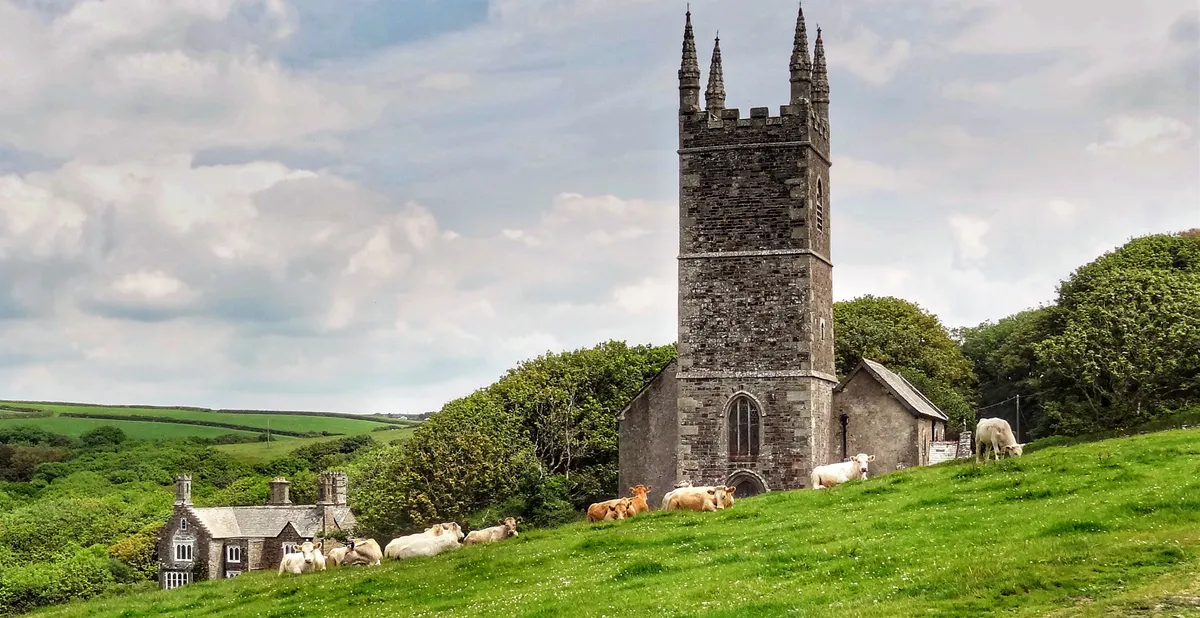
Morwenstow is Cornwall’s most northerly parish, perched on cliffs that reach over 400 feet above the Atlantic, just 2 miles from the Devon border. The parish church of St Morwenna dates from Norman times and sits in a wooded valley close to the cliff edge. Its most famous vicar, Robert Stephen Hawker, served here from 1834 to 1875 and built a driftwood hut on the cliff - now owned by the National Trust - where he wrote poetry and watched for shipwrecks along this notoriously dangerous coastline.
The coast path through Morwenstow is among the most demanding in Cornwall, with steep descents into valleys and climbs back to the cliff tops. The section south toward Bude passes through Marsland Mouth and Stanbury Mouth, both isolated coves accessible only on foot. The Rectory Farm tea rooms near the church offer cream teas in a converted barn. Bude, the nearest town with shops and restaurants, is about 6 miles south along the coast road.
Holiday properties in Morwenstow are mostly converted barns and farmhouses spread across the parish. This is genuine rural Cornwall - no street lights, no mobile signal in places, and the nearest supermarket is in Bude. The reward is dark skies, complete quiet, and some of the most dramatic cliff scenery on the entire South West Coast Path. The hamlet of Woolley, within the parish, sits in one of the deepest valleys along this stretch of coast.
Places to Stay in Morwenstow
Hand-picked accommodation from cottages to boutique hotels.